
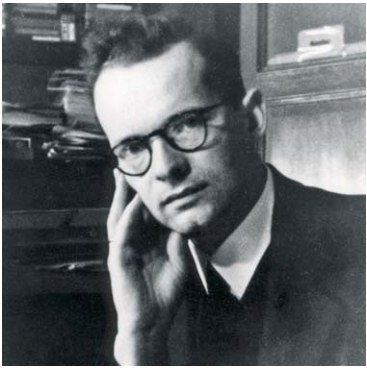
Walter Zapp
1905 – 2003
- Kapsēta
- Burial location not verified; death in Binningen, Switzerland, does not establish a grave
Walter Zapp developed the compact camera that became known as the Minox. His work focused on making a usable photographic instrument remarkably small, bringing together mechanical design, optics and the practical needs of the photographer. Born in Riga, he developed prototypes while living in Estonia and worked with VEF in Latvia to bring the camera into production. Later work in Germany continued the association between his name and miniature photography. The Minox’s subsequent use in intelligence work became part of its public reputation, but the original design also belongs to the wider history of portable consumer technology. Zapp’s career illustrates how invention depends on both an individual concept and collaboration with manufacturers able to make it reliably. Zapp’s early training took place in workshops rather than at a university. Born on 4 September 1905 into a merchant’s family, he had a father who was a British subject and a Baltic German mother. During the First World War, the Russian authorities deported the family to Ufa in the Urals. They returned to Latvia in 1918 and settled in Tallinn in 1922. His apprenticeships, first in lithography in Riga and later with the Estonian photographer Walter Lemberg, introduced him to photographic mechanisms and the equipment used to process and enlarge pictures. [2] The development project acquired a financial foundation in 1932, when Zapp entered a partnership with the merchant Richard Jürgens. Their responsibilities were divided between invention and funding, while Nikolai Nyländer became another close collaborator. Work continued for four years. In early 1936, precision mechanic H. Epner and optician K. Indus helped complete a working prototype. Its image format measured 6.5 by 9 millimetres, smaller than the 8 by 11 millimetre format adopted for the VEF version. The prototype thus emerged through the combined work of people with different technical and commercial skills. [2] Finding a manufacturer was a separate stage. Zapp approached AGFA in Germany, but the company declined his proposal. VEF accepted the project, and its engineers adapted the design to the requirements of series manufacture. The factory already occupied a prominent place in Latvian industry: alongside radios, it produced sporting aircraft designed under Kārlis Irbītis that appeared at international exhibitions and set records. Camera production therefore developed within an enterprise whose activities extended across several demanding technical fields. In Riga, VEF manufactured 17,000 cameras bearing its name and identifying Latvia as their country of manufacture. [2] The production camera measured 15 by 27 by 80 millimetres and weighed 125 grams. Its specifications included a minimum photographic distance of 20 centimetres, an aperture of f/3.5 and shutter times ranging from half a second to one thousandth of a second. Film could be loaded in daylight. Zapp also participated directly in developing equipment for processing the film and for copying and enlarging photographs. His work consequently extended beyond the small camera body to the apparatus needed to turn its tiny negatives into usable images. [2] By spring 1939, the VEF-Minox was being sold to the public as a luxury product and receiving considerable newspaper attention. Patents were sold internationally, and orders arrived from abroad. An American proposal envisaged annual production of 100,000 devices, but this scale was not achieved amid the pressures of 1939 and the interest of Germany and Russia in VEF’s output. Manufacture took place under secrecy in specially prepared, concealed premises. Zapp left Riga in March 1941. Until 1945, he worked in AEG’s electronic microscopy department, moving into another field of precision technology. [2] In 1945, Zapp and Jürgens established Minox-GmbH-Wetzlar in Germany. He moved to Switzerland in 1950 and continued developing miniature cameras. Following the restoration of Latvian independence, he returned to Riga twice, with his final visit taking place in 2001. That year brought an honorary doctorate from the Latvian Academy of Sciences and Estonia’s Order of the Cross of Terra Mariana. He died in Binningen, near Basel, on 17 July 2003. The Latvian Academy of Sciences established a prize for inventions bearing his name in 2004, providing a further institutional recognition of his work. [2]
Grāmatu “100 Latvijas personību”, kurā iekļauta arī šī personība, var iegādāties šeit.
The resting place has not yet been established.
Sources & Further Reading
Books
- [2] Apinis, P. A Hundred Great Latvians. Nacionālais apgāds, Riga, 2006, pp. 126-127. ISBN 9984-26-288-X.