
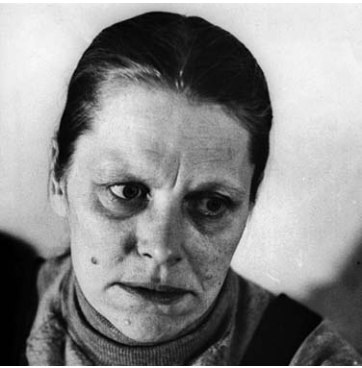
Vizma Belševica
1931 – 2005
- Kapsēta
- Rainis Cemetery / Raiņa kapi, Riga, Latvia
Vizma Belševica wrote poetry and prose that confronted the distance between official narratives and lived experience. Her literary development included a movement away from early accommodation with Soviet expectations toward an increasingly independent and critical voice. Censorship and restrictions affected the publication of her work. Translation provided another field in which she could use her linguistic skill and connect Latvian readers with other literatures. The Bille books turned childhood memory into prose attentive to poverty, family relationships and a child’s understanding of the adult world. Her biography is a record of craft and persistence under difficult conditions. She died in 2005 and was buried in Riga’s Rainis Cemetery. Belševica was born in Riga on 30 May 1931. Her first published poem appeared in 1947, and her debut collection, Visu ziemu šogad pavasaris (All Winter Is Spring This Year), followed in 1955. She later rejected that book because of its accommodation with Stalinism. In 1961 she graduated from Moscow’s M. Gorky Institute of Literature. By the 1960s her poetry collections were reaching readers in editions numbering tens of thousands, establishing a substantial audience even as her relationship with the Soviet authorities became increasingly strained. [2] The particular conflict surrounding Gadu gredzeni (Rings of Years), published in 1969, brought severe consequences. For many years afterward, her work could not be published; her home was searched, and she underwent questioning about alleged anti-Soviet activity. Not until 1976 did another poetry collection, Madaras (Madder Root Flowers), appear. She had declined to supply the conventional celebrations of the Communist Party, socialist labour and the Soviet military expected of writers. Instead, her poems addressed emotional experience, the subtleties of perception and events within ordinary life. [2] Across eight poetry collections, her writing was distinguished by exact language, compressed expression and carefully finished form. Varied rhythms and strong contrasts allowed severity and tenderness to coexist. The reach of this poetry extended well beyond Latvia: translations were published in Sweden, Finland, Britain, France, the United States and elsewhere. Scandinavian readers formed an important part of that international audience. The poet and translator Juris Kronbergs rendered her poems into Swedish, and she was repeatedly nominated for the Nobel Prize in Literature. [2] Her own translation work ranged widely across periods, languages and literary forms. It included Aztec and Huichol folk songs as well as poetry by Dante, Shakespeare, William Blake, Alexander Pushkin, Arthur Rimbaud, Marina Tsvetayeva and Vladimir Mayakovsky. She translated Shakespeare’s Measure for Measure, and her prose translations included works by Konstantin Paustovsky, Edgar Allan Poe, Ernest Hemingway and A. A. Milne. Alongside these translations, she wrote fairy-tale books for children, including Zem zilās debesu bļodas and Ceļreiz ceļš uz pasaciņu. Her bibliography therefore encompassed poetry, drama, adult prose and literature for younger readers. [2] The three Bille volumes were written during the 1990s and became her most widely recognised prose achievement. Partly autobiographical, they combine vivid narration with sympathetic irony, giving expressive force even to drab circumstances. The trilogy also appeared in Swedish and Russian. Literary work extended through her family: her husband, Zigurds Elsbergs, was a violinist and viola player, while their sons Klāvs and Jānis became poets and translators. Klāvs worked for the publisher Liesma and the journal Avots and translated Apollinaire and Kurt Vonnegut. Jānis worked for Karogs and Luna and translated authors including Walt Whitman, Charles Bukowski, Arthur Miller and Shakespeare. [2] Recognition in her later years took both institutional and literary forms. The Latvian Academy of Sciences elected her an honorary member in 1990. Sweden awarded her the Tomas Tranströmer Prize for poetry in 1998, and in 2003 she received Latvia’s annual literary award for lifetime achievement. These distinctions accompanied the continued circulation of her work at home and abroad. Her documented literary legacy embraces the eight poetry collections, the Bille trilogy, children’s stories and a substantial body of translations through which Latvian readers encountered writers from many different traditions. [2]
Grāmatu “100 Latvijas personību”, kurā iekļauta arī šī personība, var iegādāties šeit.
The map marker shows the cemetery; the exact grave position is not yet established.
Sources & Further Reading
Books
- [2] Apinis, P. A Hundred Great Latvians. Nacionālais apgāds, Riga, 2006, pp. 152-153. ISBN 9984-26-288-X.
Web resources
- [1] Vizma Belševica