
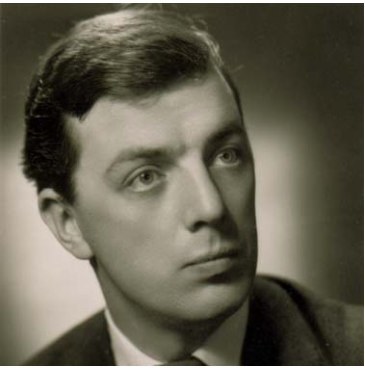
Raimonds Pauls
1936 –
Raimonds Pauls brought a pianist's understanding of rhythm and melody to songs, theatre and film music. His work moved between jazz influences, popular performance and collaborations with poets and singers. Many of his melodies became familiar across generations of Latvian listeners. His career shows how a composer can work in several musical settings while retaining a recognisable voice. Performances, recordings and broadcasts carried his music well beyond the concert hall. He also held public office, adding a political chapter to a life primarily associated with music. Born in Riga on 12 January 1936, Pauls completed Hermanis Brauns' piano class at the Latvian State Conservatory in 1958. Between 1962 and 1965 he developed his composition skills under Jānis Ivanovs. His practical performing experience had already begun during his student years, when he played both in restaurants and in concert settings. Jazz standards and the songs then current in Latvia formed part of his repertoire. The chapter records that his abilities as a pianist were attracting exceptional admiration in Latvia by the late 1960s. [2] A decisive institutional appointment came in 1964, when he became artistic director, pianist and conductor of the Riga Light Music Orchestra. He remained its artistic leader until 1971, and the ensemble's successful tours took his work throughout the Soviet Union. Later appointments placed him at the head of Studija, Modo and the Latvian Television and Radio Orchestra. He also collaborated with groups including Remix, Inversija, Credo and Dālderi. These relationships connected his composing and keyboard work with the organisation of ensembles and the development of their public repertoires. [2] The scale of his output included more than six hundred popular songs, seven musicals and four one-act ballets, alongside instrumental and jazz compositions. Sister Carry became the most widely popular of his musicals and received repeated productions in Latvian and Russian theatres. At the Riga Russian Drama Theatre, Pauls personally accompanied every performance. His work with the children's group Dzeguzīte also carried his music to markedly different venues: their appearances included Moscow, St Petersburg and New York's Madison Square Garden. The chapter additionally documents extensive work for cinema and the theatre, including participation in the 2005 concert production Melanholiskais valsis. [2] Pauls' work with singers encompassed both established careers and the introduction of new performers. The chapter associates him with Viktors Lapčenoks, Nora Bumbiere, Margarita Vilcāne, Aija Kukule, Igo, Laima Vaikule, Alla Pugacheva and Valeri Leontyev, among others. He organised a programme with Mariya Naumova before her growing popularity and victory at Eurovision in 2002. His own piano recordings also attracted a substantial audience. In another strand of performance, he gave jazz interpretations of themes by Beethoven, Tchaikovsky and Chopin, and in 1997 joined Latvian and foreign musicians at the Latvian National Opera for a programme honouring George Gershwin's centenary. [2] Administrative responsibilities began to occupy a substantial part of his professional life. From 1982 to 1988 he headed the music broadcasting editorial board within Soviet Latvia's television and radio organisation. He served as Minister of Culture from 1988 until 1993, then advised Latvia's president on culture and art between 1993 and 1998. His parliamentary service began in 1998. During the independence movement, he accompanied national songs at the gathering held at Riga's Mežaparks open-air stage on 7 October 1988. The chapter records attendance of more than one hundred thousand people at that demonstration. [2] Festival organisation provided another enduring field of activity. Pauls helped establish the annual Jaunais Vilnis competition in Jūrmala, working with Russian composer Igor Krutoi, and organised the children's festival Cālis and the summer Ziņģe celebrations. He was also involved in establishing the Great Latvian Music Award ceremony and in organising the national song festivals. His song To My Homeland regularly occupied the closing position at those festivals. Institutional recognition included honorary membership of the Latvian Academy of Sciences in 1992 and the Order of the Three Stars in 1995, while releases in Russia, Finland and Japan documented the geographical reach of his recordings. [2]
Grāmatu “100 Latvijas personību”, kurā iekļauta arī šī personība, var iegādāties šeit.
Sources & Further Reading
Books
- [2] Apinis, P. A Hundred Great Latvians. Nacionālais apgāds, Riga, 2006, pp. 162-163. ISBN 9984-26-288-X.