
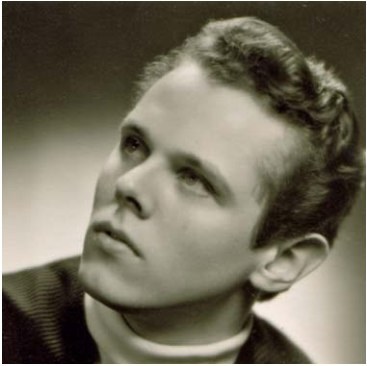
Mariss Jansons
1943 – 2019
- Kapsēta
- Volkovo Cemetery, Literatorskie Mostki, Saint Petersburg, Russia
Mariss Jansons developed an international conducting career distinguished by long relationships with major orchestras. Born in Riga into a musical family, he trained in the Soviet Union and later worked across Europe and the United States. His appointments included orchestras in Oslo and Pittsburgh, the Bavarian Radio Symphony Orchestra and Amsterdam's Royal Concertgebouw Orchestra. His reputation grew through rehearsals, concerts and recordings that joined close musical preparation with a strong relationship to the players. The range of ensembles he led also made him an important figure in the international circulation of orchestral traditions. His death in 2019 brought tributes from musical institutions around the world. Jansons’s early years were marked by both musical opportunity and wartime family loss. His mother was Jewish, and her father and brother had been killed in the Riga Ghetto before his birth in 1943. In Riga he attended Secondary School No. 49 and learned the violin. His father, Arvīds Jansons, won recognition in a Soviet conducting competition in 1946 and, in 1952, received an invitation from Yevgeny Mravinsky to assist him at the Leningrad Philharmonic. The family joined Arvīds in Leningrad in 1956, bringing Mariss’s childhood in Latvia to a close. [3] After completing school, he entered the choral conducting department of the Leningrad Conservatory, switching to symphonic conducting after a year. His studies also included violin, viola and piano, and he graduated with high honours. In 1969 he pursued further training with Hans Swarowsky in Vienna and Herbert von Karajan in Salzburg. Victory in the International Herbert von Karajan Foundation Competition in Berlin in 1971 widened his opportunities to work and study beyond the Soviet Union. These stages of education preceded his appointment as a conductor of the Leningrad Philharmonic in 1973. [3] Following his father’s sudden death while conducting in 1984, Jansons became the orchestra’s second conductor under Mravinsky. He continued working alongside Mravinsky’s successor, Yuri Temirkanov, until late 1999. Meanwhile, his appointment as artistic director in Oslo in 1979 developed into a relationship lasting more than twenty years, during which the orchestra gained an international standing and appeared in major concert halls. Norway recognised his contribution in 1995 by appointing him a Commander with Star of the Royal Norwegian Order of Merit, an honour the chapter identifies as the country’s highest available to a foreign recipient. [3] From the 1992–93 season he also served as principal guest conductor of the London Philharmonic. Invitations took him to orchestras across North America and Europe, including those of Boston, Chicago, Cleveland, Berlin and Vienna. His Latvian engagements included the 1995 reopening concert of the restored National Opera and a subsequent symphonic programme at Riga’s Great Guild Hall. In April 1996 he suffered a heart attack during a concert. After six months of hospital recuperation, he resumed conducting; in June 1997 he directed Verdi’s Requiem with the State Academic Choir Latvija and accepted the music directorship of the Pittsburgh Symphony Orchestra. [3] In Pittsburgh, Jansons sought a larger public role for music within a city strongly associated with sport. His efforts encountered financial difficulties: municipal support went towards two stadiums, while the orchestra faced economies that extended to musicians’ salaries. Disappointed by these circumstances, he returned to Europe. In 2003 he took charge of the Bavarian Radio Symphony Orchestra and Choir in Munich. The following September he succeeded Riccardo Chailly as principal conductor of Amsterdam’s Royal Concertgebouw Orchestra. A recording of Shostakovich’s Thirteenth Symphony with the Bavarian ensembles received the Grammy for orchestral performance in 2005. [3] Formal recognition also linked his international career to musical institutions in Britain and Latvia. London’s Royal Academy of Music elected him an honorary member in 1999, and the Jāzeps Vītols Latvian Academy of Music made him an honorary professor in 2006. He received Latvia’s Order of the Three Stars and was granted Latvian citizenship in recognition of his contribution to the country’s international profile. As the Concertgebouw’s principal conductor, he accompanied Queen Beatrix of the Netherlands on a visit to Latvia, adding a ceremonial dimension to his continuing connections with the country of his birth. [3]
Grāmatu “100 Latvijas personību”, kurā iekļauta arī šī personība, var iegādāties šeit.
The map marker shows the cemetery; the exact grave position is not yet established.
Sources & Further Reading
Books
- [3] Apinis, P. A Hundred Great Latvians. Nacionālais apgāds, Riga, 2006, pp. 186-187. ISBN 9984-26-288-X.