
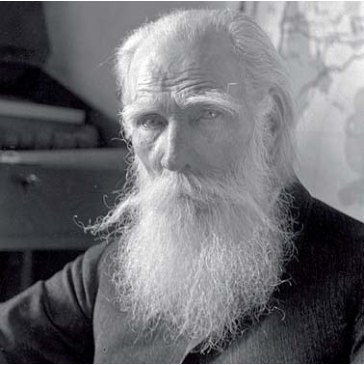
Krišjānis Barons
1835 – 1923
- Kapsēta
- Great Cemetery / Lielie kapi, Riga, Latvia
Krišjānis Barons transformed contributions from a wide network of collectors into an organised record of Latvian folk poetry. The resulting Latvju dainas preserved songs about work, family relationships, seasons and the passage of a human life. His task required comparison and classification as much as collection. Earlier, Barons had studied mathematics and astronomy at Dorpat and participated in the Young Latvian movement. He brought the habits of an organiser to material gathered by teachers, correspondents and other contributors. The Dainu skapis, the cabinet used to arrange the handwritten song slips, became a symbol of this undertaking. His achievement is best understood as both individual scholarship and collective cultural work: many people supplied the songs, while his sustained editorial effort made the collection accessible to later readers and researchers. Born at Strutele, near Jaunpils, on 31 October 1835, Barons was the youngest of eight children in the household of a manor overseer. His early public work extended well beyond folklore. He produced approximately one hundred articles on science and education, presenting subjects in language accessible to Latvian peasants. In 1859 he wrote a pioneering geography of the Baltic region, followed in 1862 by the first Latvian-language treatise on Darwinism. These publications placed scientific knowledge among the subjects available to a growing Latvian readership. [2] From 1862 to 1865, Barons effectively edited Pēterburgas Avīzes in St Petersburg. Although the newspaper existed only briefly, it widened public discussion and challenged the privileges of the German nobility. His subsequent employment took him into education: between 1867 and 1893 he taught in Voronezh Province and Moscow. It was during these years in Russia that Fricis Brīvzemnieks, a poet and folklorist, persuaded him in 1878 to undertake responsibility for gathering and arranging Latvian songs. Teaching and the developing collection consequently occupied overlapping periods of his life. [2] The material reaching him belonged to a tradition transmitted chiefly through performance and memory. Most dainas consisted of four lines governed by a regular metre, a form that helped successive generations retain them. Barons asked contributors to record what older people in their neighbourhoods could sing or recite. More than nine hundred people answered, among them clergy, teachers, writers and businesspeople. His editorial work included explanations of the customs associated with particular songs, so that the words could be understood alongside the occasions on which they had been used. He also sought to reconstruct the earliest historical versions that the available material allowed. [2] The practical arrangements changed as the collection expanded. Barons first stored songs in cigarette boxes; in 1880 a cabinet was constructed in Moscow from his drawings. When he returned to Latvia in 1893, it held approximately 150,000 songs. Publication then proceeded in stages rather than as a single undertaking. J. Dravnieks issued the first volume in Jelgava during 1894–1898, with financial assistance from Heinrich Wissendorff. The remaining five volumes appeared in St Petersburg between 1903 and 1915 with support from the Imperial Academy of Sciences, completing a publication programme that had extended over two decades. [2] The total submitted to Barons reached 217,996 dainas, but the geographical record remained incomplete. Of Latvia’s 526 parishes, 218 had supplied none. He continued accepting and arranging material after the six-volume edition had appeared and began organising a further collection campaign. A photograph from 1920 shows him working on newly received songs with his daughter-in-law. After his death, the Latvian Folklore Depository pursued collection in the areas absent from the original submissions. The published achievement therefore did not bring the recording of local traditions to an end. [2] Barons died in Riga on 8 March 1923 and was buried in Lielie kapi beside Krišjānis Valdemārs and Fricis Brīvzemnieks. By his final years he was widely known by affectionate names meaning Father of Folk Songs and White Father. Latvju dainas was reprinted in 1922–1923 and again in 1989–1994. In 2001 the song cabinet and its contents entered UNESCO’s Memory of the World Register. The chapter locates the original in the Latvian Folklore Depository and a replica in the Barons Museum in Riga, documenting both its scholarly custody and its public commemoration. [2]
Grāmatu “100 Latvijas personību”, kurā iekļauta arī šī personība, var iegādāties šeit.
The map marker shows the cemetery; the exact grave position is not yet established.
Sources & Further Reading
Books
- [2] Apinis, P. A Hundred Great Latvians. Nacionālais apgāds, Riga, 2006, pp. 22-23. ISBN 9984-26-288-X.