
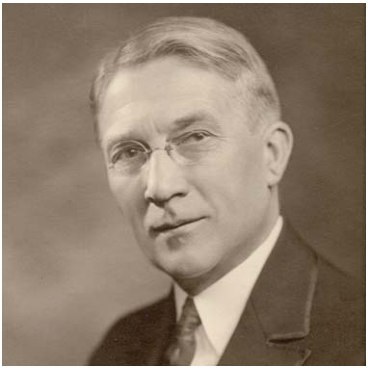
Kārlis Reinholds Zariņš
1879 – 1963
- Kapsēta
- Latvian section, Brookwood Cemetery, Surrey, United Kingdom
Kārlis Reinholds Zariņš helped preserve Latvia’s diplomatic presence after the country lost its independence in 1940. As envoy in London, he held emergency powers granted before occupation and used them to maintain representation and defend the principle of Latvian state continuity. His earlier career included diplomatic service in several countries and responsibility for foreign affairs. After occupation, that experience became part of a much longer effort carried out without a functioning government at home. The work supported contacts, documents and public recognition that mattered to displaced Latvians as well as to international diplomacy. He remained associated with the London legation until his death in 1963. Born in Valmiera District on 4 December 1879, Zariņš received his education in Rūjiena and subsequently attended advanced commercial courses in St Petersburg. There he became active in the Latvian Charity Association. During the First World War he represented the Latvian Refugee Supply Central Committee in Russian organisations concerned with refugee welfare. In Riga in 1918, he joined the National Council as a member of the Latvian Radical Democrat Party and became secretary of the municipal board. His early international assignments included serving as an attaché with Latvia’s delegation to the Paris Peace Conference. [2] His diplomatic responsibilities in northern Europe began with an appointment to Finland in 1921. From 1923 his accreditation also covered Sweden, Norway and Denmark, while his base remained Helsinki. Between 1925 and 1930 he represented Latvia in those three Scandinavian countries from Stockholm. His work included developing cultural and economic relations and organising the official visits of Latvian President Gustavs Zemgals and Sweden’s King Gustav V in 1929. During the king’s visit to Riga, Zariņš received the Order of the Polar Star, First Class with Chain. [2] In 1930 he took up a posting in Estonia, which continued until 1933. Part of that period overlapped with his service as foreign minister in the cabinet of Marģers Skujenieks, from December 1931 to March 1933. He then became Latvia’s envoy to the United Kingdom. As Soviet pressure increased in 1939, including Moscow’s demand for permission to establish military bases on Latvian territory, exchanges of information between Zariņš in London and the government in Riga became more frequent. [2] The emergency arrangements approved on 17 May 1940 named the Washington envoy, Alfrēds Bīlmanis, as his deputy should Latvia’s government become unable to function. Following the Soviet occupation of 17 June, both diplomats submitted protests to their respective host governments on 23 July and requested that the occupation not be recognised. Soviet authorities in Latvia attempted to dismiss Zariņš on 1 August, citing alleged disciplinary offences and placing him outside legal protection. During August, the Kirhenšteins administration also ordered the closure of Latvia’s representations abroad and expelled foreign correspondents. [2] His public work after 1940 included involvement in Latvian organisations outside the occupied country. In 1941 he founded the Latvian Society in the United Kingdom and also served on the presidium of the Latvian National Council there. At his initiative, Latvian representations across Europe and five principal Latvian political parties were brought together in 1952. That year he visited Latvian communities in North America, addressing an audience in Ottawa in June. Photographs also document his contacts with Latvian community groups in Britain, including an appearance with his wife Henrieta alongside folk dancers. [2] Zariņš died on 29 January 1963 and was buried in the Latvian section of Brookwood Cemetery. The London representation continued under Teodots Ozoliņš, Pauls Reinhards and Marija Anna Zariņa. In Washington, the corresponding diplomatic succession included Jūlijs Feldmanis, Arnolds Spekke and Anatols Dinbergs. The United Kingdom and United States did not recognise Latvia’s incorporation into the Soviet Union. Through these continuing representations, Latvia remained a subject of international diplomatic attention until independence was restored in 1991, long after Zariņš’s own service had ended. [2]
Grāmatu “100 Latvijas personību”, kurā iekļauta arī šī personība, var iegādāties šeit.
The map marker shows the cemetery; the exact grave position is not yet established.
Sources & Further Reading
Books
- [2] Apinis, P. A Hundred Great Latvians. Nacionālais apgāds, Riga, 2006, pp. 82-83. ISBN 9984-26-288-X.