
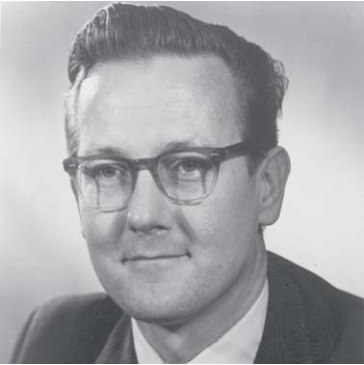
Juris Upatnieks
1936 –
Juris Upatnieks helped transform holography into a practical way of recording and reconstructing three-dimensional images. Working with Emmett Leith, he developed techniques that used laser light to produce strikingly clear holograms. Their achievement advanced an idea previously introduced by Dennis Gabor. Born in Riga, Upatnieks left Latvia with his family during the Second World War and later settled in the United States. His education and research career developed there, particularly in Michigan. His work connects the history of displacement with the international growth of optical engineering. Upatnieks’s schooling continued through refugee life in Germany before his family emigrated to the United States in 1951. At Ellet High School in Akron, Ohio, he graduated in 1955 with the highest grade average in his class. He then studied electrical engineering at the University of Akron, graduating with distinction in 1960. Immediately afterward, he joined the University of Michigan’s Institute of Science and Technology to work in research and development. He continued his education part-time while employed there and received a master’s degree in electrical engineering in 1965. [2] The Michigan experiments, begun in 1960, addressed a specific obstacle in earlier holography. Gabor’s method had demonstrated the recording of small, transparent objects, but reconstruction produced two images in the same position, with one out of focus. Leith proposed separating them by introducing a reference beam directed at an angle to the light arriving from the object. He and Upatnieks tested that arrangement experimentally. The resulting fine interference pattern allowed the images to be separated, making it possible to recover clear views rather than an image obscured by its overlapping counterpart. [2] This arrangement widened the range of objects that could be recorded, including three-dimensional objects that reflected light. The researchers presented their discovery in three papers published between 1962 and 1964, after which investigation of holography and its possible applications expanded internationally. Their achievement brought a nomination for the Nobel Prize in Physics. The work was important not simply as a new kind of image-making demonstration: it made holography usable in optical instruments, scientific experiments, product inspection, and the accurate recording of an object’s position in space. [2] Upatnieks subsequently developed applications of the method, including an optical sight whose aiming reticle could appear at a distance of twenty-five meters. This design improved the speed and accuracy of aiming and came into use among hunters, law-enforcement personnel, and military units. Another application described in connection with the development of holography was interferometric testing of aircraft tires, a means of supporting aviation safety. His inventive output amounted to nineteen United States patents, ten naming him as the sole inventor. These practical developments accompanied the research that had established his reputation among optical scientists. [2] From 1973 to 1993 he continued his scientific work at the Environmental Research Institute of Michigan. Alongside that position, he held an adjunct associate professorship in the University of Michigan’s electrical engineering and computer science department. There he created an optics laboratory course and taught it for twenty-five years, continuing until 1996. Between 1993 and 2001 he worked as a consultant, while from 1996 to 2001 he was also an adjunct associate research scientist in Michigan’s Department of Mechanical Engineering and Applied Mechanics. Research, laboratory instruction, and consulting thus remained parts of his professional activity. [2] Professional recognition included the Optical Society of America’s R. W. Wood Prize in 1975, followed in 1976 by an Inventor of the Year award from the American Association for the Advancement of Invention and Innovation and the American Society of Mechanical Engineers’ Holley Medal. He became a fellow of both the Optical Society of America and SPIE. As a foreign member of the Latvian Academy of Sciences, he also received its Grand Medal in 1999, recognizing his contribution to holography’s underlying principles and to its wider adoption. [2]
Grāmatu “100 Latvijas personību”, kurā iekļauta arī šī personība, var iegādāties šeit.
Sources & Further Reading
Books
- [2] Apinis, P. A Hundred Great Latvians. Nacionālais apgāds, Riga, 2006, pp. 164-165. ISBN 9984-26-288-X.
Web resources
- [1] Juris Upatnieks