
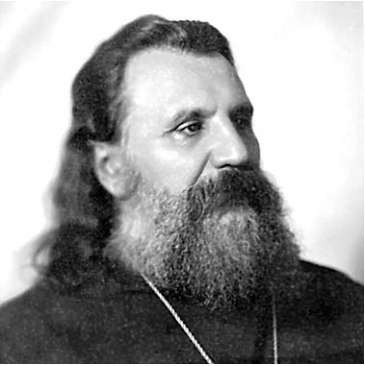
Jānis Pommers
– 1934
- Kapsēta
- Current resting place requires confirmation; distinguish his original burial from later translation of relics
Jānis Pommers, known in church life as Archbishop John, led the Latvian Orthodox Church during the early republic. His responsibilities combined ecclesiastical leadership with the practical task of establishing the church’s position within an independent state. He also served in parliament. His career had previously taken him through several centres of Orthodox education and administration in the Russian Empire. In Latvia, religious identity and political representation were closely connected aspects of his public role. He was murdered in 1934 and was later recognised as a saint by the Orthodox Church. His exact birth date also needs calendar verification. Pommers grew up in a family whose religious history was part of the spread of Orthodoxy among Latvians. His father, Andrejs, is identified in the chapter as the first Latvian in his province to adopt the Orthodox faith; his mother was Yevdokiya. His formal theological education began in Riga, where he completed the ecclesiastical seminary with distinction in 1897. Further study took him to the ecclesiastical academy in Kiev. There he completed his education with distinction and received a doctorate in 1904, while also progressing through the stages of entry into religious service. [2] In 1903, at twenty-seven, he became a monk and was subsequently ordained a deacon. Ordination to the priesthood followed in 1904. His advancement brought administrative as well as pastoral duties: in 1906 he became rector of the ecclesiastical seminary in Vilnius and supervised a monastery. When he became a bishop in 1912, he was the youngest holder of that office in the Russian Empire. These appointments preceded a period in which church administration became inseparable from the upheavals following the Bolshevik seizure of power. [2] He was serving in Tver in 1917. The following year, Patriarch Tikhon elevated him to archbishop and assigned him to Penza, where he prevented a division within the church. Bolshevik persecution included repeated arrests, imprisonment and torture; the chapter also records that he was sentenced to death. His congregation did not remain passive during his detention. Believers carrying an image of the Cross gathered at the prison gates and called for his release. These events formed the immediate background to his eventual transfer to Latvia. [2] On 8 June 1921, Tikhon granted substantial autonomy to the Latvian Orthodox Church and appointed Pommers to lead it. A document prepared under Pommers’ guidance distinguished internal independence from the continuing spiritual and hierarchical relationship with Moscow. Arriving in Riga that year without a residence, he took accommodation beneath the Cathedral of the Nativity of Christ. The cathedral itself required recovery and renovation: its bells, icons and iconostases had been removed to Russia during the war, and German forces had used the building for Lutheran garrison worship. Pommers secured its return to the Orthodox parish and worked on its restoration. [2] The wider church faced damaged institutions and an unresolved legal position. Pommers sought parliamentary election after other attempts to defend its interests had proved unsuccessful, and served in the second, third and fourth Saeima. He spoke forcefully against Social Democratic and Communist ideas. His parliamentary activity helped secure registration, legal personality and property rights for the church. The Riga seminary reopened, Orthodox fraternities and parishes resumed their activities, and ten churches were built. Alongside this institutional rebuilding, he maintained unity between Latvian and Russian Orthodox believers rather than allowing separate national church bodies to emerge. [2] His violent death on 12 October 1934 remained unresolved. The chapter records torture, gunshot wounds and deliberate burning, but identifies neither the perpetrators nor their motives as established. It distinguishes this uncertainty from the popular belief that the Soviet NKVD was responsible. On 17 July 2001, the Russian Orthodox Church’s Holy Synod, meeting under Patriarch Alexis II, decided to canonise him; the ceremony took place in Riga. The chapter also records subsequent canonisation by the Byzantine and Latvian Orthodox Churches. His remembrance thus includes both the rebuilding of church institutions and formal religious recognition of his martyrdom. [2]
Grāmatu “100 Latvijas personību”, kurā iekļauta arī šī personība, var iegādāties šeit.
The resting place has not yet been established.
Sources & Further Reading
Books
- [2] Apinis, P. A Hundred Great Latvians. Nacionālais apgāds, Riga, 2006, pp. 72-73. ISBN 9984-26-288-X.
Web resources
- [1] Jānis Pommers