
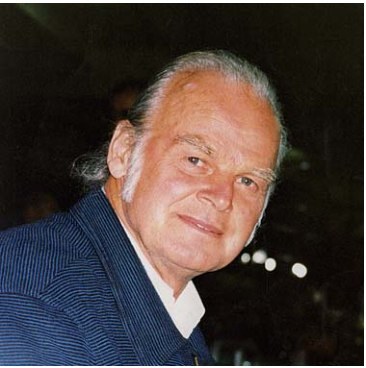
Jānis Lūsis
1939 – 2020
- Kapsēta
- Burial location pending verification
Jānis Lūsis was one of the outstanding javelin throwers of his generation. Competing for the Soviet Union, he won Olympic bronze in 1964, gold in 1968 and silver in 1972. That sequence reflects sustained achievement across three Olympic cycles. His career also included world records and major European successes. Javelin demands a carefully coordinated combination of speed, strength and technique, and his performances became an important reference point in the event's development. After his own competitive career, he remained connected with athletics through coaching. For Latvian sporting history, his achievements belong both to the circumstances of Soviet-era representation and to a continuing local tradition in the javelin. Born in Jelgava on 19 May 1939, Lūsis showed considerable ability in athletics while still at school, particularly in the decathlon. He began throwing the javelin in 1957 as a student at the Latvian State Institute of Physical Culture. His coach was Valentīns Mazzālītis, a long-serving lecturer who trained several leading Latvian javelin throwers. Lūsis’ first competition produced a distance of 44.52 metres. The decathlon remained an area of early achievement, but his subsequent nineteen-year javelin career brought results far beyond that initial performance. [2] The sporting system in which he developed combined extensive state support with intense political expectations. Soviet officials treated international competition as a means of demonstrating the state’s strength and demanded victories at major championships. Although athletes formally held amateur status, their training was supported through nominal employment in factories, collective farms, the armed forces or the militia. Membership of a national team also allowed international travel that was largely unavailable to other Soviet citizens. For Latvian competitors, selection presented an additional obstacle: the chapter describes the influence of Moscow and Leningrad coaches, who tended to favour their own athletes. [2] Lūsis’ competition record shows both exceptional distances and repeated high-level performances. Across his career, he exceeded 90 metres in fifteen contests and 80 metres in 160. He twice improved the world record, earned four European championship gold medals and collected twelve medals as USSR champion. The American magazine Track & Field News ranked him as the world’s leading javelin thrower for more than a decade. These achievements were spread across a long competitive career rather than confined to a single outstanding season or one major championship. [2] Preparation for Mexico City began in 1965, following his 80.57-metre performance at the Tokyo Olympics. The altitude of the forthcoming Olympic venue, approximately 2,300 metres, became a specific consideration in training. An upland stadium near Alma-Ata was used both for preparation and for the USSR championship, providing conditions comparable to those expected in Mexico. By the time of the 1968 Games, Lūsis had already exceeded 90 metres six times that year and held the world record. In the Olympic competition, his final throw reached 91.10 metres and secured first place. [2] At Munich in 1972, the decisive contest was exceptionally close. Klaus Wolfermann of Germany threw 90.48 metres, finishing just two centimetres ahead of Lūsis. The official result placed Lūsis second. He returned for a fourth Olympic appearance in Montréal in 1976, at the age of thirty-seven. There, a throw of 80.26 metres gave him eighth place in what became his final Olympic Games. His four appearances thus extended from Tokyo to Montréal and included a final competition twelve years after his Olympic debut. [2] His family also had a notable place in the event. Elvīra Ozoliņa, whom he married, had won the women’s Olympic javelin title in Rome in 1960. Their son Voldemārs later competed in the Olympic javelin twice. Lūsis’ subsequent responsibilities included coaching the national athletics teams of Latvia and Madagascar and serving as chief coach of Latvia’s Olympic athletics team. He also founded a club supporting young Latvian javelin throwers. These activities extended his involvement beyond his own results to national-team work and assistance for a younger generation of competitors. [2]
Grāmatu “100 Latvijas personību”, kurā iekļauta arī šī personība, var iegādāties šeit.
The resting place has not yet been established.
Sources & Further Reading
Books
- [2] Apinis, P. A Hundred Great Latvians. Nacionālais apgāds, Riga, 2006, pp. 176-177. ISBN 9984-26-288-X.
Web resources
- [1] Jānis Lūsis