
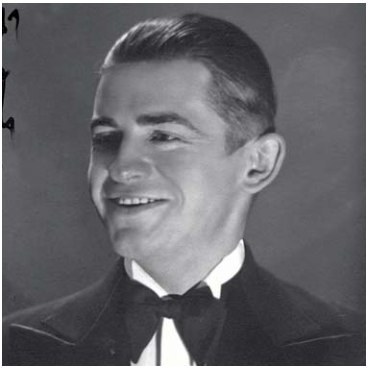
Jānis Daliņš
1904 – 1978
- Kapsēta
- Valmiera City Cemetery, Latvia; remains returned from Melbourne in 1997
Jānis Daliņš helped place independent Latvia on the international sporting map. His silver medal in the fifty-kilometre walk at the 1932 Los Angeles Olympics was Latvia’s first Olympic medal. European success and record performances made him a prominent public figure. His achievements grew from sustained training associated with Valmiera, where his name remains important in sporting memory. The Second World War forced a move into exile, and he eventually settled in Australia. His later life thus connects athletic history with the experience of the Latvian diaspora. He died in Melbourne in 1978. Daliņš’s route into competitive athletics began at the Valmiera Realschule, where sports teacher Alfrēds Lukstiņš encouraged his interest. Born near Valmiera on 5 November 1904, he initially concentrated on running before choosing race walking. His routine included two daily training sessions, one during the midday break and another after school in the evening. International recognition followed in 1929, when he finished second in the Berlin walking competition Quer durch Berlin. The next year he defeated established international competitors there, beginning a sequence of victories in the event in 1930, 1931, 1932 and 1939. [2] His performances in Riga brought record-setting athletics before an enthusiastic home audience. On 16 June 1932 he established his first world record, over twenty-five miles. Spectators responded by standing and singing Latvia’s national anthem. Another race in Riga, on 1 June 1933, yielded four world records, including a twenty-kilometre time of one hour, thirty-four minutes and thirty-four seconds and a distance of 24,843 metres covered in two hours. Altogether, the chapter credits him with six world records. He also became European champion in the fifty-kilometre walk in Turin and won numerous other international competitions. [2] Olympic competition brought both achievement and disappointment. After his Los Angeles success, he entered the 1936 Games and held a substantial lead through the thirty-two-kilometre point, but cramp forced him to withdraw. Another Latvian, Adalberts Bubenko, won bronze in that event. Daliņš subsequently prepared intensively for the planned 1940 Helsinki Olympics, with several international victories in 1939 demonstrating his continued competitive activity. The Soviet invasion of Finland that year disrupted those preparations. His later sporting chronology was therefore shaped not only by performance and physical condition, but also by the international conflict. [2] Public recognition extended well beyond the racecourse. On his return from Los Angeles, Valmiera welcomed him enthusiastically; among those accompanying him was Jānis Puriņš, proprietor of the Splendid cinema and a sponsor of his sporting career. Daliņš received a new farm in recognition of his records and Olympic medal. The chapter describes him as approachable and unassuming, and records that he considered himself a farmer. On 15 May 1940 he received the Fatherland Prize for bringing Latvia international recognition. His prominence, together with Bubenko’s achievements, helped make race walking a popular sport during the 1930s. [2] Before leaving Latvia as a refugee in July 1944, Daliņš buried his awards near his home, Daliņi, outside Valmiera. He first went to Germany and moved to Australia in 1949. There he worked as a tradesman and led the Latvian Sporting Club in Melbourne from 1959 to 1964. The hidden awards remained in Latvia until their discovery in 1993, after the restoration of sovereignty, and subsequently entered the Valmiera Museum. They provide a surviving material record of the athletic career that preceded his years abroad. [2] Following his death on 11 June 1978, Daliņš was initially buried in Melbourne. His remains were returned to Valmiera City Cemetery on 21 June 1997, and the city’s stadium bears his name. A memorial foundation established in Melbourne in 1978 supported remembrance through awards recognising achievements and conduct that offered an example to Latvian youth. His sporting legacy also belongs to a continuing national tradition: the chapter places later walkers, including Ādolfs Liepaskalns, Arnolds Krūkliņš and Pēteris Zeltiņš, within the development he helped establish. In 2000, Aigars Fadejevs’s Olympic silver medal in the fifty-kilometre walk provided a further Latvian achievement at the same distance. [2]
Grāmatu “100 Latvijas personību”, kurā iekļauta arī šī personība, var iegādāties šeit.
The map marker shows the cemetery; the exact grave position is not yet established.
Sources & Further Reading
Books
- [2] Apinis, P. A Hundred Great Latvians. Nacionālais apgāds, Riga, 2006, pp. 122-123. ISBN 9984-26-288-X.