
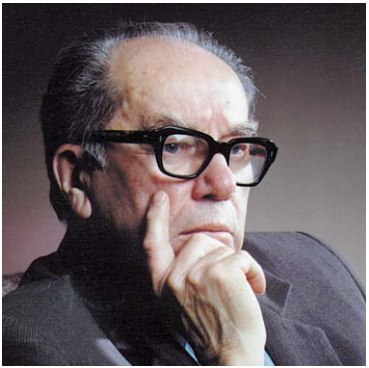
Eduards Berklavs
1914 – 2004
- Kapsēta
- Rainis Cemetery / Raiņa kapi, Riga, Latvia
Eduards Berklavs’ political life moved from communist activism to opposition to Soviet policies and support for restored Latvian independence. As a senior official in Soviet Latvia, he argued for a stronger place for the Latvian language and for limits on policies he believed weakened local society. Removal from office in 1959 marked an important break in that career. Later criticism of the Soviet system and participation in the Latvian National Independence Movement placed him in a different political role. His career reflects substantial changes in political conviction as well as persistent concern for Latvia. He lived to see independence restored and died in Riga in 2004. Born in Kuldīga District on 15 June 1914, Berklavs began earning his living while still a child and continued studying alongside his work. Following the coup of 15 May 1934 and the dissolution of most political organisations, he joined the underground Communist youth movement, the Komsomol. In Riga he worked in an electromechanical workshop and attended evening studies at the University of Latvia. He also set type for an illegal Komsomol printing operation. That activity led to his arrest in 1936 and imprisonment until 1939. [2] After the Soviet occupation in 1940, Berklavs worked in the Komsomol Central Committee and the Communist Party’s Riga organisation. In 1941 he entered the Red Army’s Latvian Rifle Division, serving first as a soldier and later as an officer. Demobilisation brought appointments in Communist youth, party and Soviet administrative institutions. He also participated in postwar reconstruction and was among the founders of the Riga Film Studio. Graduation from the Communist Party’s Higher School in Moscow in 1951 preceded his advancement to senior government responsibilities in Latvia. [2] Berklavs served as deputy chairman of the Latvian SSR’s Council of Ministers in 1954–1956 and again in 1958–1959. The chairman, writer Vilis Lācis, devoted considerable attention to literary work, leaving Berklavs with substantial responsibility for economic administration. By the middle of the decade, he was challenging policies associated with Russification. His measures sought to restrain population growth through uncontrolled immigration, and he required leading officials who had come from outside Latvia to learn Latvian within two years. These actions placed questions of language and population policy within the work of the republic’s government. [2] During Nikita Khrushchev’s visit to Riga in 1959, the Soviet leader ordered Berklavs’s dismissal from his posts and removal from Latvia. He spent nearly nine years in Vladimir, managing a film rental service, before returning in 1968. Back in Latvia, he worked at the Riga Electric Machinery Plant until retirement. Restrictions excluded his writing from publication and prevented mention of his name in newspapers, radio and television. In 1971 he organised a letter signed by seventeen Latvian Communists and addressed to Communist parties abroad. It detailed criticism of Russification in Latvia and reached an international audience through press and radio coverage. [2] In 1988 Berklavs helped establish the Latvian National Independence Movement with fellow activists including Einars Repše. Its programme called for Latvia to leave the Soviet Union, the prompt departure of Soviet troops and the repatriation of people who had immigrated during the occupation. He was also a founding and active participant in the Latvian Popular Front. Elected to the republic’s Supreme Soviet in March 1990, he cast his vote for the restoration of independence on 4 May. He subsequently served in the restored Republic of Latvia’s fifth Saeima. [2] His later public work included participation in the renewal of the Riflemen’s Association, which brought together Latvian soldiers who had served on opposing sides during the Second World War. He wrote approximately two hundred articles addressing Latvia’s political, economic and social affairs. The chapter records awards of the Order of the Three Stars in 1995 and 2000. His eightieth birthday was marked by a gift from folklorist Dainis Stalts: a Lielvārde belt, presented in recognition of his public service. Berklavs was buried in Riga’s Rainis Cemetery. [2]
Grāmatu “100 Latvijas personību”, kurā iekļauta arī šī personība, var iegādāties šeit.
The map marker shows the cemetery; the exact grave position is not yet established.
Sources & Further Reading
Books
- [2] Apinis, P. A Hundred Great Latvians. Nacionālais apgāds, Riga, 2006, pp. 132-133. ISBN 9984-26-288-X.