
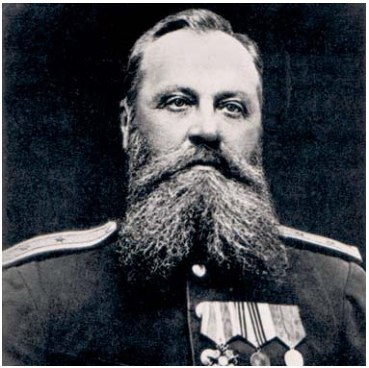
Andrejs Pumpurs
1841 – 1902
- Kapsēta
- Great Cemetery / Lielie kapi, Riga, Latvia
Andrejs Pumpurs gave literary form to one of Latvia’s most recognisable heroes. His epic Lāčplēsis, published in 1888, combined inherited legends with a nineteenth-century concern for freedom and national identity. Its images and characters later acquired lives of their own in theatre, music and public commemoration. Pumpurs’ experience extended beyond writing. He worked in practical occupations, travelled and served as an army officer. These encounters accompanied an enduring interest in the oral traditions of the Daugava region and in the cultural aspirations of the Young Latvians. His importance does not depend on treating the epic as a literal history: it is an imaginative work through which later generations have explored courage, betrayal and belonging. He died in Riga after a life that connected literary creation with extensive travel. Born in Lieljumprava on 22 September 1841, Pumpurs completed his schooling in Lielvārde. From 1858 he worked as a surveyor in Piebalga and other parts of Vidzeme, meeting figures active in Latvian intellectual life. His residence in Vecpiebalga between 1867 and 1872 was especially productive for his writing and included the beginnings of his epic. During visits to his parents he also formed a friendship with the teacher’s assistant and poet Auseklis. They shared an interest in poetry and folklore, together with an attachment to Latvia and its people. [2] The epic developed slowly rather than emerging as a single act of inspiration. Pumpurs consulted folklore and mythological material alongside the medieval Livonian chronicle associated with Henry of Livonia. He was influenced by Latvian literature of the middle nineteenth century and by the writings of Garlieb Merkel, while also studying folk epics from other countries. His treatment presented medieval conquest from a Latvian perspective, challenging accounts that primarily described the German invaders as bearers of culture. The work’s historical argument was carried through poetic narrative, supernatural figures and legendary encounters rather than through a conventional historical account. [2] The central conflict gives physical strength a vulnerable source: Lāčplēsis’s power depends on his bear-like ears. Kangars betrays that secret to the German conquerors, enabling the Black Knight to deprive the hero of his strength during their struggle. The two opponents then fall together into the Daugava. Around this contest, Pumpurs assembled deities, witches and other supernatural beings, as well as legendary heroes associated with Estonia and Russia. These elements place the struggle for the land within a wider imaginative world, while betrayal and the unresolved combat provide enduring images for subsequent interpretations. [2] Pumpurs’s life meanwhile continued through family responsibilities and military employment. He married Ede Goba in Vecpiebalga on 27 July 1875, despite opposition from her father. In 1876 he travelled to Moscow and worked as a topographer with the Don Cossack Regiment. After graduating from the military college in Odesa in 1878, he served in locations across Russia and beyond. He completed Lāčplēsis in Dorpat, now Tartu, in 1888 and dedicated it to the Third All-Latvian Song Festival. The book subsequently received seventeen reprintings and translations into numerous languages. He also published two scientific works. [2] The hero’s public meanings changed with Latvia’s political circumstances. Lāčplēsis represented freedom during the 1905 Revolution and again during the fighting of 1919. His name became attached to Latvia’s highest military decoration and to the commemorative day associated with the 1919 struggle. In the 1930s his image was used extensively in the national symbolism promoted under Kārlis Ulmanis. Soviet authorities later appropriated the same name for accounts of Latvian participation in the war against Germany, as well as for a collective farm and settlement. The figure thus remained visible under sharply different political systems. [2] Pumpurs became seriously ill after returning from China in 1901. He died in Riga on 6 July 1902 and was buried in the city’s Large Cemetery. Lielvārde commemorated him through a museum bearing his name, while the epic continued to generate new works. During the national mobilisation of the late 1980s, Māra Zālīte and Zigmars Liepiņš created a rock opera based on Lāčplēsis that reached very large audiences. Its reception formed another stage in the history of a character whose significance extended far beyond the lifetime and original publication of his creator. [2]
Grāmatu “100 Latvijas personību”, kurā iekļauta arī šī personība, var iegādāties šeit.
The map marker shows the cemetery; the exact grave position is not yet established.
Sources & Further Reading
Books
- [2] Apinis, P. A Hundred Great Latvians. Nacionālais apgāds, Riga, 2006, pp. 26-27. ISBN 9984-26-288-X.
Web resources
- [1] Andrejs Pumpurs