
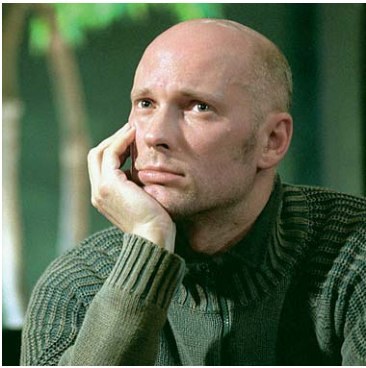
Alvis Hermanis
1965 –
Alvis Hermanis developed a theatre practice attentive to the details of human behaviour, memory and social environment. His work with the New Riga Theatre became an important part of contemporary Latvian performance, while productions abroad brought his directing to wider audiences. Works such as Long Life and The Inspector General show different ways of building a theatrical world through actors, objects and the organisation of space. Observation can become both affectionate and unsettling. His career includes international theatre and opera projects, but the close study of people remains a useful starting point for understanding his work. Born in Riga on 27 April 1965, Hermanis attended Secondary School No. 72 before pursuing several forms of performance training. He participated in Riga Pantomime during 1981–1982 and in the Popular Film Actor Studio from 1982 to 1985. His formal theatre studies at the State Conservatory of Latvia ran from 1984 to 1988. Among the teachers he later acknowledged were Māra Ķimele, Roberts Ligers, Aina Matīsa, Arnolds Liniņš, Edmunds Freibergs and Modris Tenisons. This education encompassed acting, physical performance and the directing work he began while still a student. [2] In 1987 he created a stage adaptation of Kafka’s The Trial and received the Lielais Kristaps film award for his portrayal of Kārlis in The Photo with the Woman and Wild Boar. After graduation, he left for the United States to avoid conscription into the Soviet army and obtained political asylum. His work in New York included the leading part in Year of Jubilee at the Art’s Club’s Theatre in 1990. He returned to Latvia in 1992, following the restoration of independence, as a new theatre institution was being established in Riga. [2] Hermanis applied to lead that institution but was not selected from the four candidates. He nevertheless joined its company and directed the New Riga Theatre’s inaugural production, Returning is Like a Slow and Peaceful River. Its stage elements included four performers, two doves and a block of ice that gradually melted. In 1997 he became the theatre’s artistic director. The working process under his leadership could involve rehearsals lasting more than six months, with professional preparation given particular emphasis. His association with the company thus developed from an unsuccessful leadership application into a sustained directorial appointment. [2] Marquise de Sade, staged in 1993, won Latvian awards for a directing début and for the year’s best production, followed by recognition at festivals in Toruń in 1994 and St Petersburg in 1995. His subsequent repertoire included The Picture of Dorian Grey, My Poor Marat, The Queen of Spades and Tale about Kaspar Hauser. Opera also formed part of his early directing career: his 1995 production of Jānis Mediņš’s Fire and Night at the Latvian National Opera received the Great Music Award. These works demonstrate the range of texts and performance forms he addressed during the 1990s. [2] The Inspector General brought a press award at St Petersburg’s Baltiyskiy Dom festival in 2002 and the Max Reinhardt Pen at Salzburg in 2003. Long Life, centred on Latvian pensioners’ daily existence, received Diena’s culture award in 2004, the grand prix at the Belgrade International Theatre Festival in 2005 and a Herald Angel in Edinburgh in 2006. His overseas directing included The Ice in Frankfurt and at the RuhrTriennale in 2005, followed by Flaming Darkness in Zürich in 2006. These engagements accompanied the New Riga Theatre’s extensive international touring. [2] Hermanis continued to act as well as direct, receiving a best-actor nomination in 2004 for Jean in Māra Ķimele’s Miss Yulia. He also undertook stage design and dramaturgical work. In Sonya, staged in 2006 from a story by Tatyana Tolstaya, he retained narration rather than converting the prose into conventional dialogue: one actor told the story while another embodied Sonya. Alongside The Latvian Stories of 2005, such work added further approaches to the company’s repertoire. His productions attracted international press attention and became objects of study for emerging directors. [2]
Grāmatu “100 Latvijas personību”, kurā iekļauta arī šī personība, var iegādāties šeit.
Sources & Further Reading
Books
- [2] Apinis, P. A Hundred Great Latvians. Nacionālais apgāds, Riga, 2006, pp. 208-209. ISBN 9984-26-288-X.
Web resources
- [1] Alvis Hermanis